
by Katerina Velentza, Briony McDonagh, Steven Forrest and Irene Polinskaya
In April 2026, we spent a week on the Greek island of Aegina as part of a project – led by Professor Irene Polinskaya at the Department of Classics, King’s College London – exploring ‘hidden’ cultural heritage and its potential to address acute water shortages on the island, which affect everyday life of its current residents. During our stay, we delivered a series of participatory workshops using methods built from our previous research at the University of Hull, such as the AHRC-funded ‘Risky Cities’ project, the IAA-AHRC-funded ‘Community Waterscapes’ project, and the Aviva Foundation-funded ‘Mapping Flood Recovery Gaps’ project.
Aigina (also spelled as Aegina,Αίγινα in Greek), a small island in the Aegean Sea just south of Athens, has experienced water scarcity for millennia. From Antiquity to today, local myths, festivals, folklore and traditional water infrastructure all signal extensive experience of living with limited water resources.
Over the last 30 years, overtourism combined with rising temperatures, droughts and saline intrusion into local freshwater aquifers have meant that drinking water must be brought into the island from the mainland. In the late 1990s, this arrived in water-carrying tanker ships and more recently, a 14.4 km underwater pipeline has been constructed to deliver water. Yet this has been plagued by malfunctions and damage, leaving the residents of Aigina without running water several times in recent years. Between December 2025 and April 2026, a pipeline issue meant the people of Aigina had no clean water, forcing locals to resort to old local boreholes and wells, which in turn led to health problems. Hence, locals had to use bottled water for more than three months, while there was also inadequate communication from municipal authorities concerning the quality of water from the mains.
During our visit, we held three workshops for local residents to start a conversation about water scarcity and water resilience in Aigina. Our first workshop used our ‘Flood Recovery Game’ and participatory mapping to co-explore Aigina-specific problems and identify potential solutions. Our second workshop used our ‘learning histories’ approach to facilitate discussions about how people lived with water scarcity in the past, what water risks were facing the island today and what living successfully with water could look like in the future. Using collages, we sought to connect the three historical moments (past, present and future) and produced a timeline to plan for adaptation and change. Our final workshop took place in the village of Kypseli, where we led a participatory workshop on oral histories related to water management. Local participants shared their experience of how they lived with water scarcity and managed water before the 1990s, as well as their knowledge about local springs, streams, rivers, cisterns, wells, and their use in the past and present.
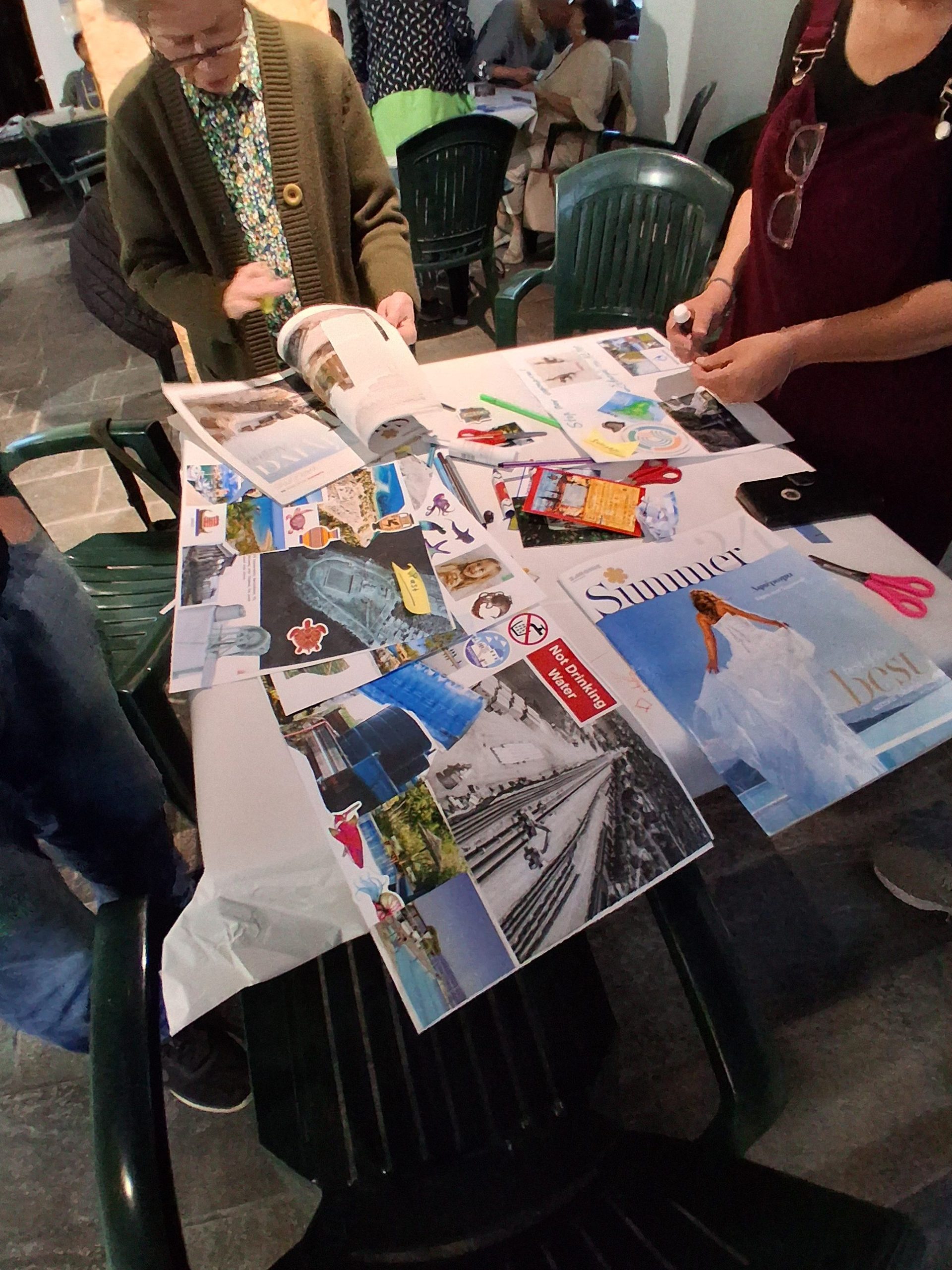
All the workshops sought to provide opportunities for community partners and local participants to share their knowledge, lived experiences and concerns about water-related environmental issues on Aegina including water scarcity and drought, but also flood risk and rising sea levels which are now endangering coastal heritage.
Importantly, we worked in close collaboration with local community organisations throughout the workshops including the Society of Active Citizens (Σύλλογος Ενεργών Πολιτών), the Society of Friends of Aigina (Οι Φίλοι της Αίγινας), the Aeginaia periodical, the Educational and Cultural Society of Kypseli (Μορφωτικός και Πολιτιστικός Σύλλογος Κυψέλης) and the Educational Society of Aigina ‘Kapodistrias’ (Μορφωτικός Σύλλογος Αίγινας ο Καποδίστριας). Special thanks go to Elika Vlachaki from the Society of Active Citizens, who went above and beyond in helping us arrange the workshops, their venues and resources, Anthe Louizou for the live translation she provided in our workshops, Iannis Psallidakos for showing us his local hiking paths, and H. P. Coulon, the lead of the Paths of Culture (Μονοπάτια Πολιτισμού) initiative, who provided technical support for the workshops.
During the week, we also undertook field walks to familiarise ourselves with some of the water installations that workshop participants told us about. Visiting these sites helped us situate local water memories and monuments within their broader context and informed our thinking about how they might be revitalised and meaningfully reconnected to contemporary water management practices and infrastructure.
It also allowed us to identify sites of pre-modern water infrastructure to be used to create a resource for future research and community engagement using our innovative participatory methods and approaches. The sites we visited were identified via a combination of literature search, observations in the field, oral histories and community contributions from the workshops.
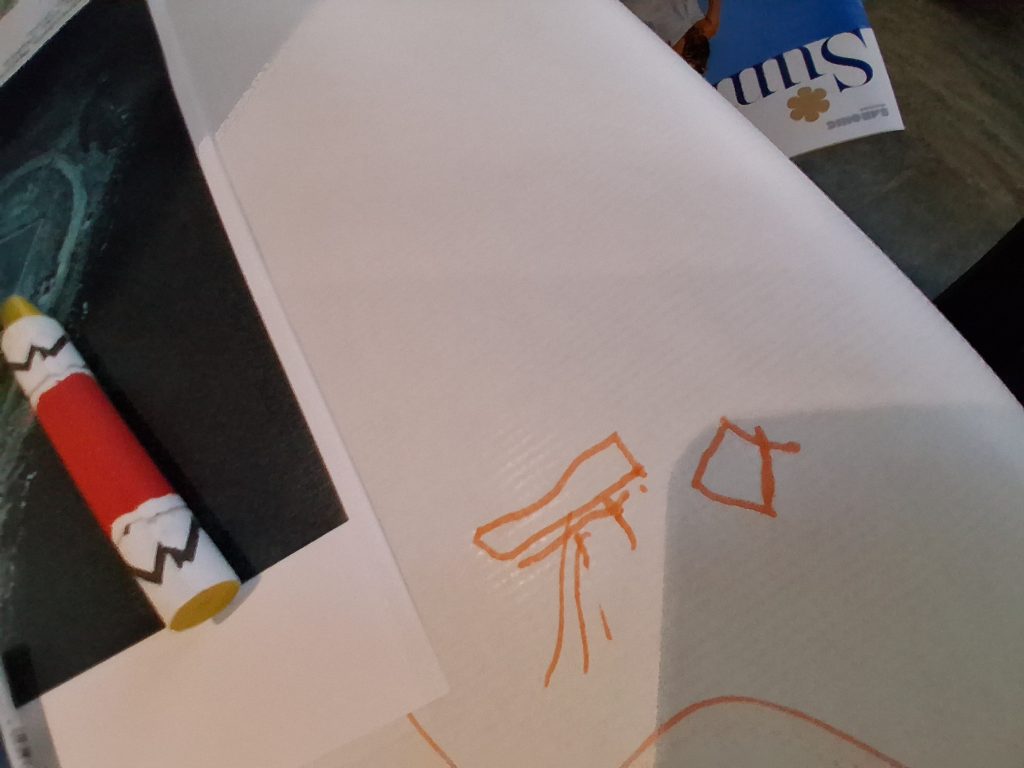
One of our most exciting site visits was in the ancient olive grove of Eleonas. In our second workshop, a member of the community told us about a cistern they had seen in the area of Eleonas, even making a sketch for us, illustrating its rough location and nearby small channel which fed the cistern.
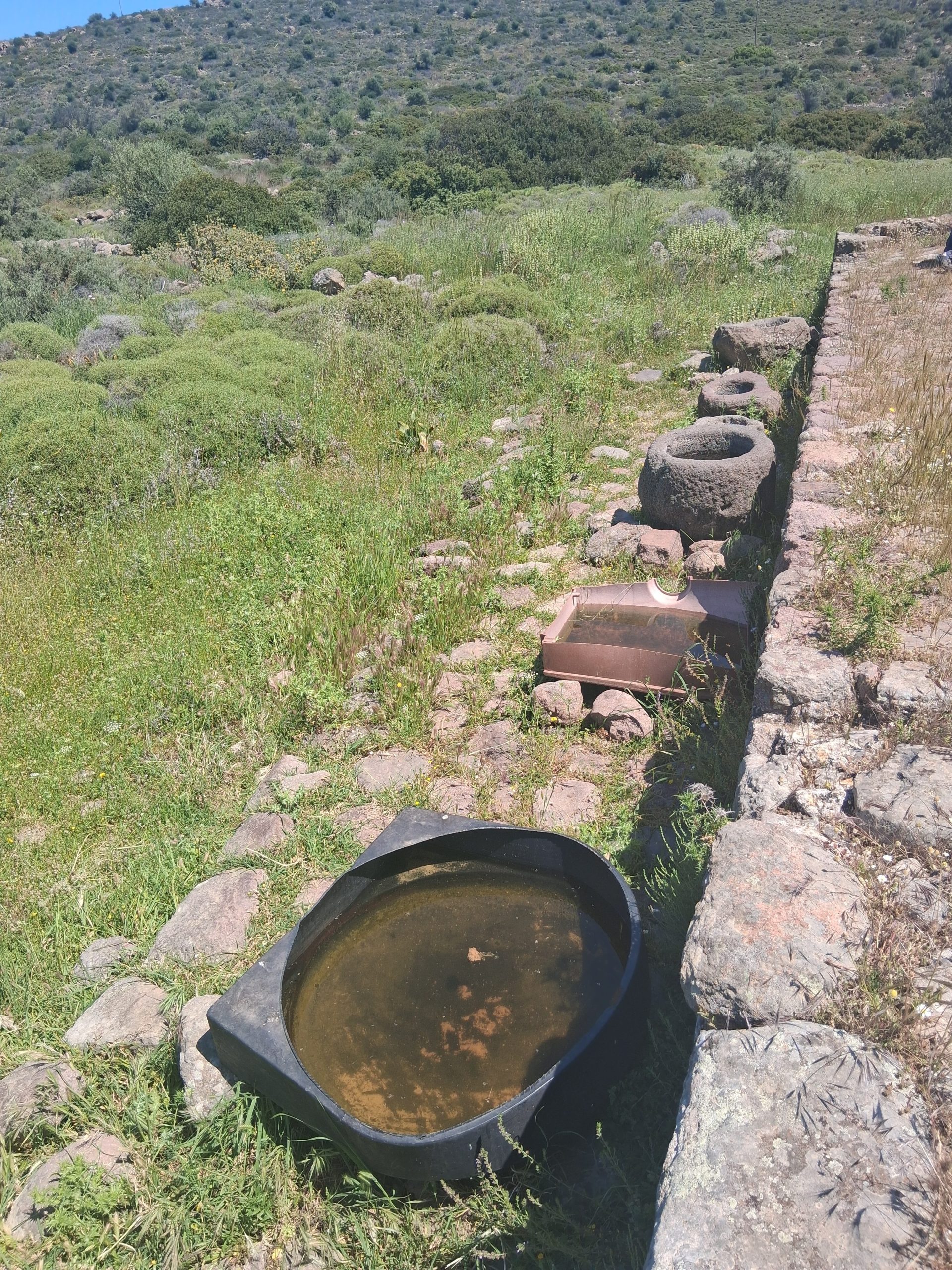
Led to the site by Iannis Psallidakos, we saw the large cistern, located next to the church of Agia Triada. The cistern was partially-subterranean, had a vaulted ceiling and two access hatches. It was surrounded by a number of water troughs, suggesting that it was used to water livestock. But exactly how the water reached the cistern was not immediately clear to us.
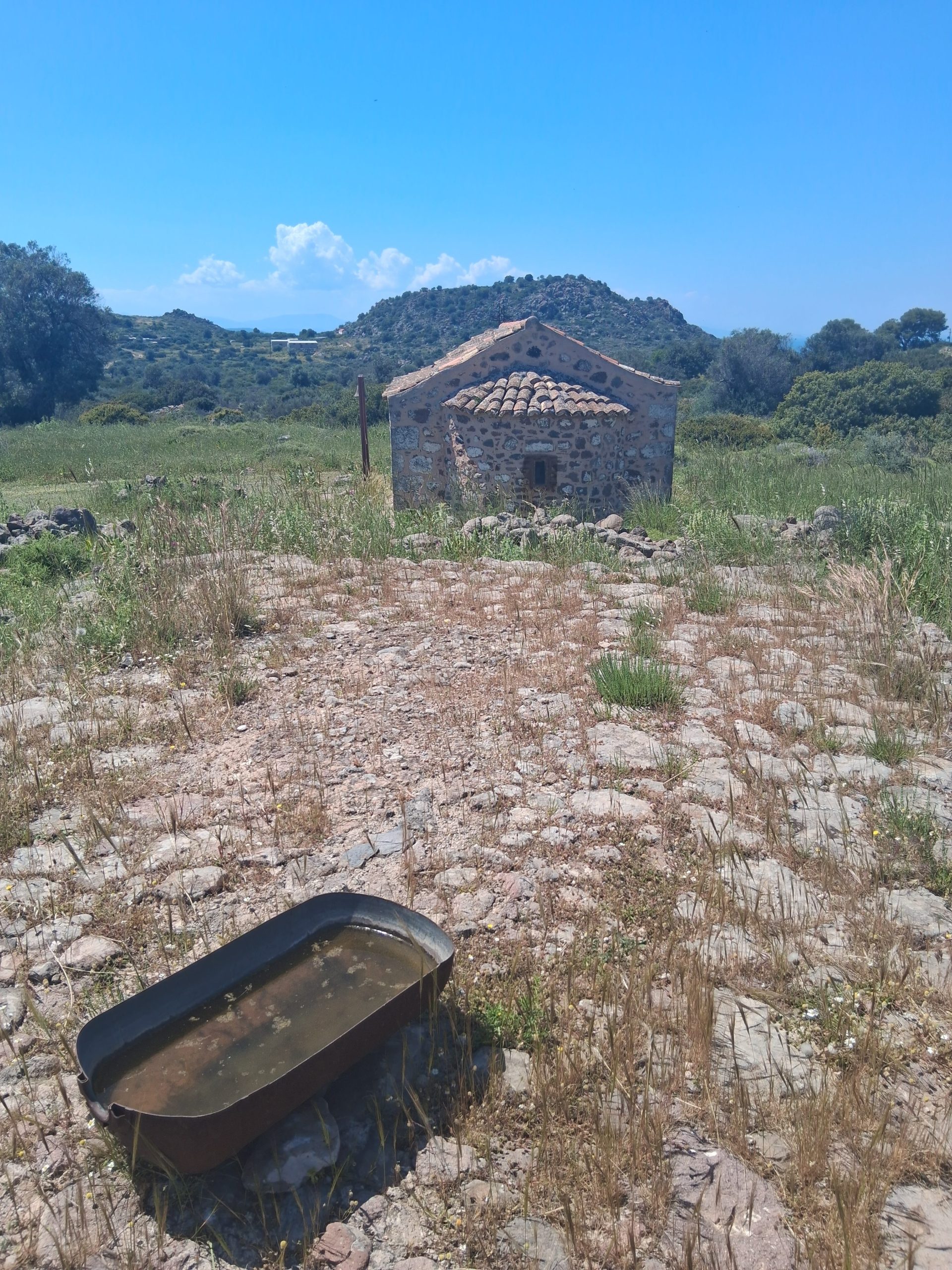
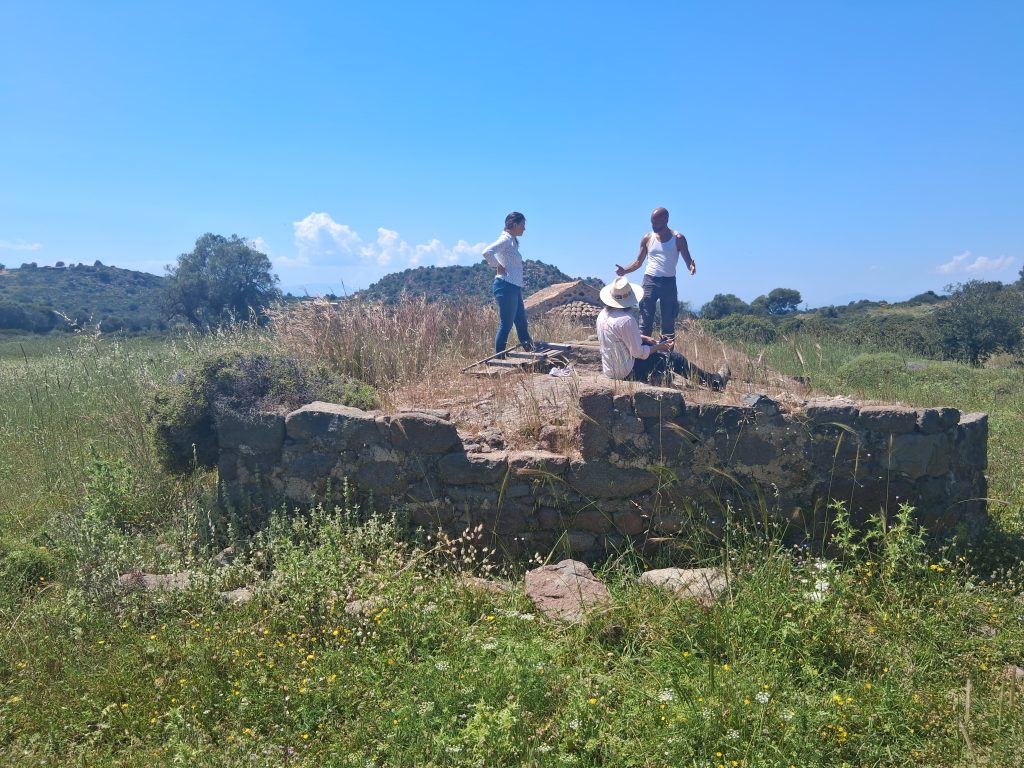
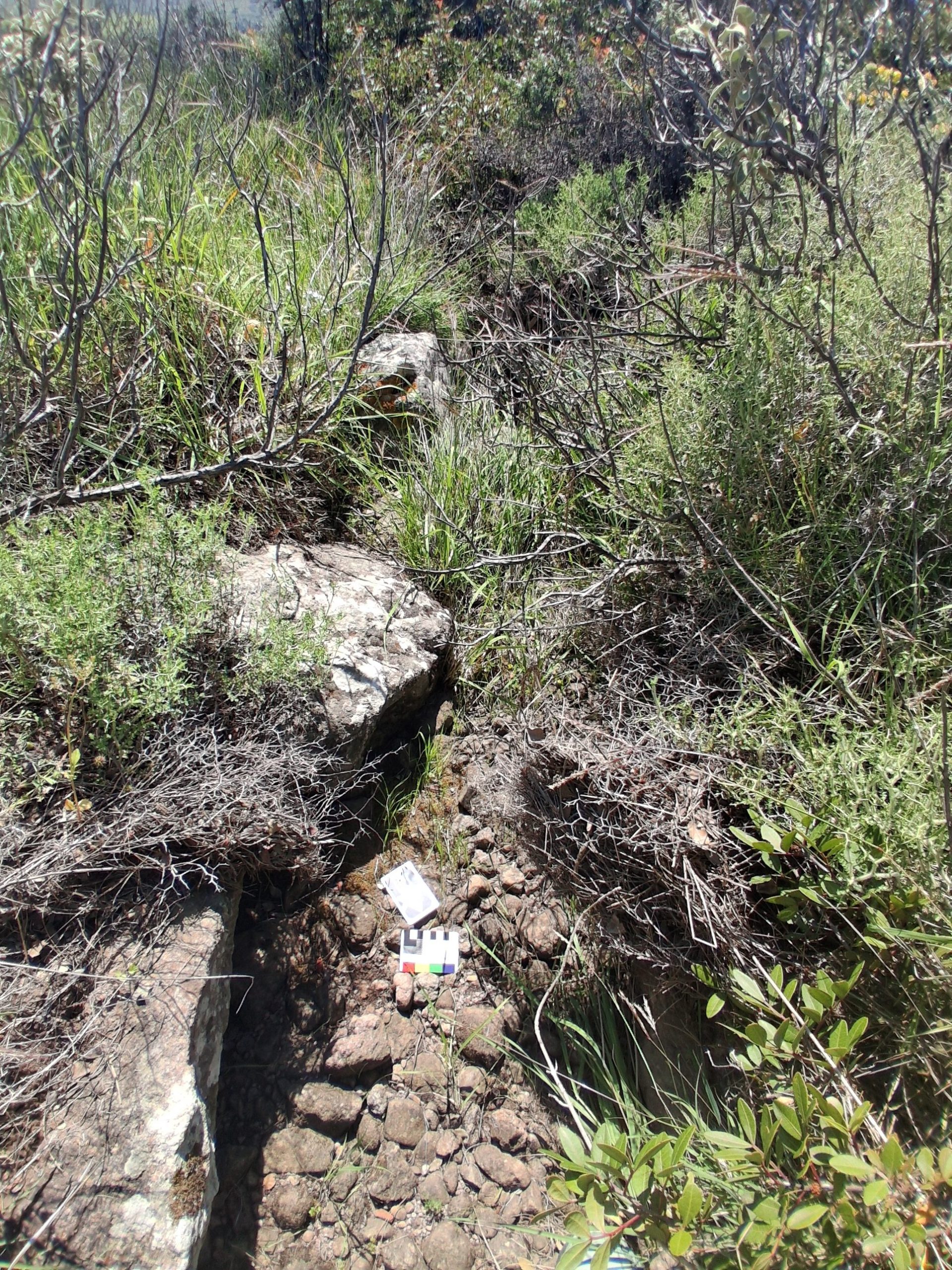
Amidst the thick (and very thorny!) shrubs and glorious spring flowers carpeting the ground, we eventually found the artificial channel or leat depicted in the sketch.
Running north-east to south-west, the channel is lined with large stones, and more formally paved and culverted at its south-west end as it approaches the cistern. Although almost completely dry on the hot spring day we visited, our field observations suggest that water is diverted from a seasonal stream in winter so as to fill the cistern and thereby provide water throughout the rest of the year. A possible spring – appearing to well up next to large boulders under a pine tree part-way along the channel – may provide a secondary water source. At the western end of the cistern, we found also an overflow channel which released water, potentially returning it to the stream, when the cistern is full.
The cistern appears old, but its precise date is unknown, as are the dates of the feeder channel, culvert and overflow. Future investigation may help to establish a more precise date for the cistern and/or shed further light on when the feeder channel was first cut. In a striking link between past and present, the cistern and feeder-system apparently continue to serve a practical purpose today, being used by locals to water goats and other livestock.
Our field walks, guided in part by our workshop participant observations and landscape knowledge of the locals, offered a unique perspective on the dynamics of water in a dry and demanding landscape. This experience offered us wider insights into how people have understood, managed and lived with scarcity across generations. Documenting these features alongside the data collected in our participatory workshops will be the first step in researching place-based and heritage-informed solutions to the problem of water scarcity on Aigina. A water heritage ArcGIS digital storymap, to be developed in the following months, will offer a community-driven record of tangible and intangible heritage related to water. We hope it will further support academic research (such as the project on Thirsty Islands of the Aegean Sea, led by Irene Polinskaya) but also local initiatives, such as the local Oral History Group of Aigina (ΟΠΙΑΙ – Ομάδα Προφορικής Ιστορίας Αίγινας). In working with colleagues in the UK and partners in Greece, we hope to support future community-led research, engagement and conversations around water histories and water futures not only on Aigina, but in other water-stressed landscapes facing similar challenges around the world.
Acknowledgements
The project was funded by King’s College London under the AHRC-IAA Rapid Response Fund scheme (project: Activating the ‘hidden heritage potential’ of Aigina-island to address acute local water shortages linked to climate change’ led by Irene Polinskaya) and by the University of Hull.