
by Nathalie Holloway
Centre for Water Cultures PhD student Nathalie Holloway reflects on her research project ‘A Dry Topic: Creative Community Engagement for Drought Resilience’ which explores using creative and historical methods for building household resilience to drought.
Recent dry weather has brought drought and future water scarcity to the fore of public discussion, however conversations about the role that households might play in drought resilience are difficult. Drought is often described as an invisible, or creeping phenomenon that is more difficult to perceive than flooding or coastal erosion. It tends to be on people’s minds during summer, but fades after an onset of rain, even if drought conditions persist in the environment. The water supply system largely insulates domestic consumers from fluctuations in water availability but, as a result, it can be difficult to visualise how a severe drought might affect households, or what role households ought to play within broader drought risk management.
My project has built on the ‘learning histories’ approach by drawing on the drought of 1976 as a means of stimulating discussions about drought coping for domestic users. The drought of 1976 is often used as a cultural benchmark and point of comparison for hot, dry summers. Indeed, the drought this year has prompted a flurry of articles comparing now with the ‘historic drought of 1976’.[1].
During 1976, parts of Devon and South Wales experienced water rationing. Yorkshire Water Authority (the public body that preceded Yorkshire Water plc) launched a savings campaign, and there was concern that urban centres in West Yorkshire, including Leeds and Wakefield could face water rationing by standpipe. Indeed, in Wakefield standpipes were put up, but ultimately heavy rainfall meant that people were spared water rationing.
Having visited the National Archives, the West Yorkshire Archive Service, North Yorkshire Archives, and online newspaper sources, I compiled a package of archival materials that reflected contemporary debates and messaging around the 1976 drought. Using this material, I ran participatory workshops in Hull, Richmond, Halifax, Hebden Bridge, Goole and Riddlesden. I ran these workshops collaboratively with Save Our Swale Action Group, Riddlesden Green Connection, Goole Museum, Halifax Library, Wakefield Local History Group, Pennine Heritage Centre, and the Water and Coasts Network in Hull.
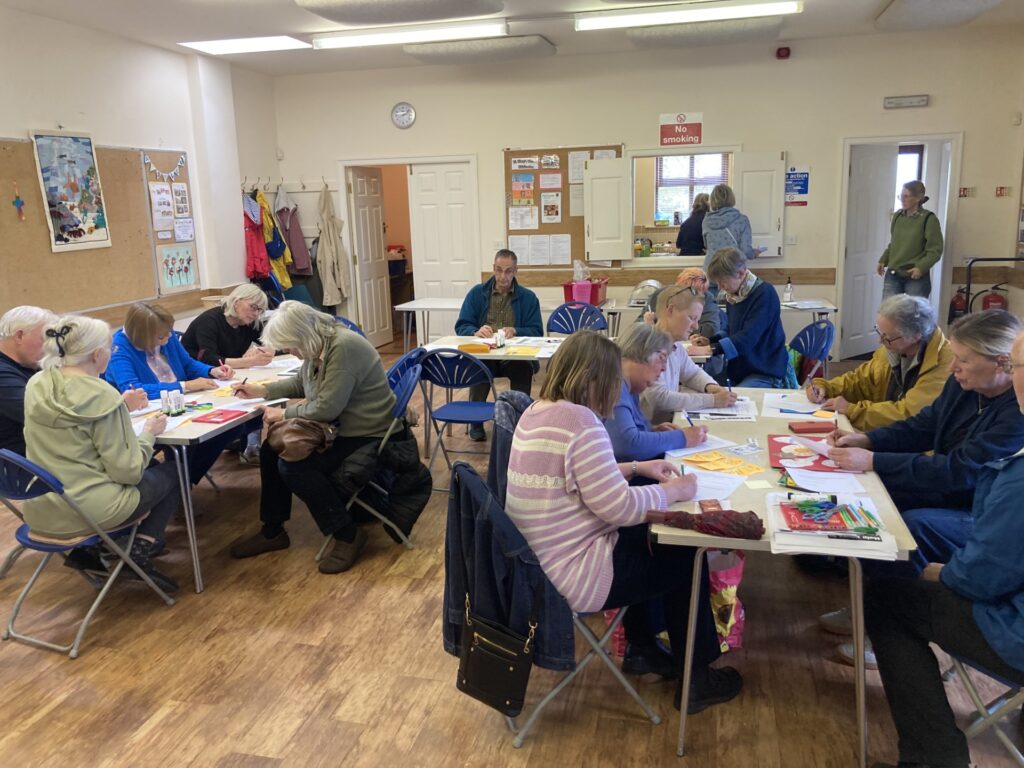
In these workshops, I invited participants to devise a creative response to the material, either in the form of creative writing or collage. We then discussed what had changed since the 1976 drought, and what was helpful or not helpful about drawing on an instance of historical drought to think about the challenges that communities face now.
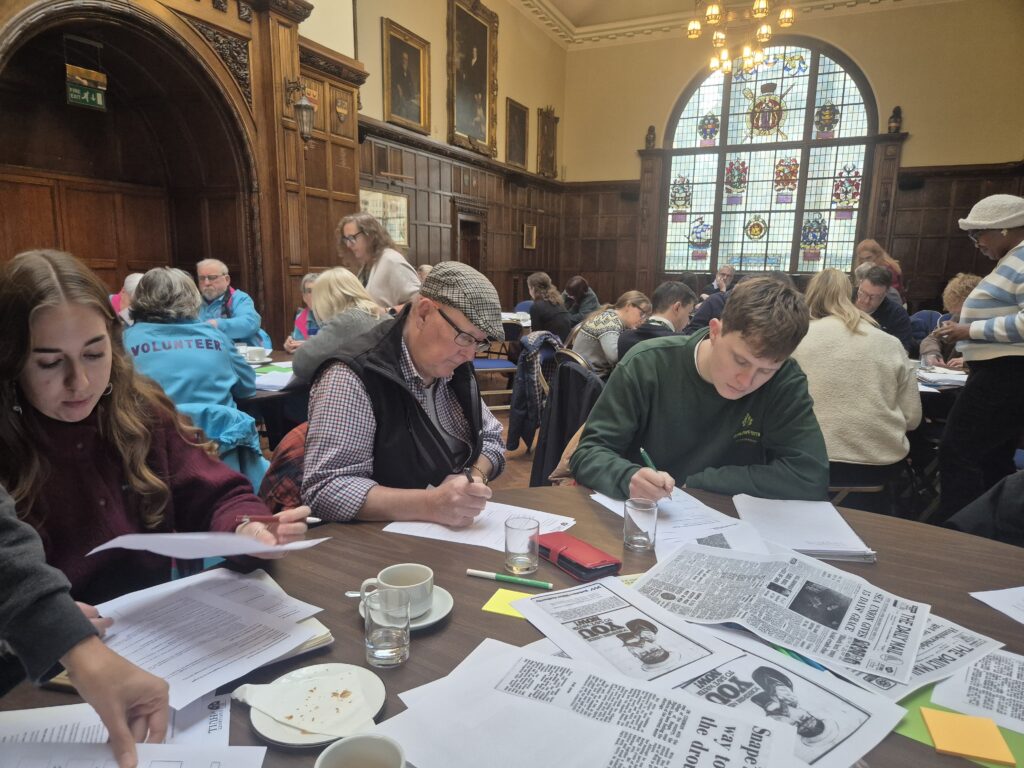
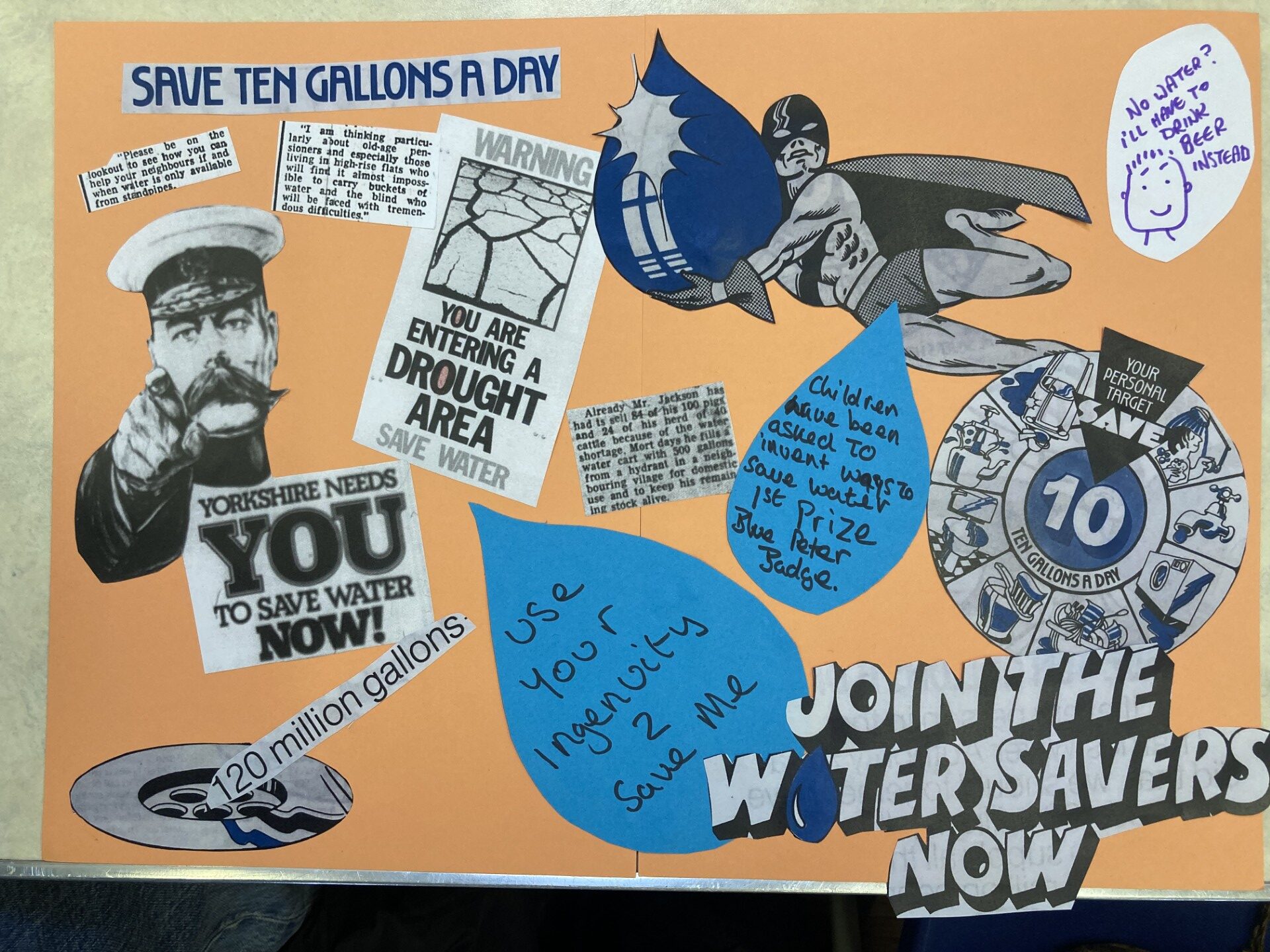
These conversations covered the role of households in the drought resilience of the water system, as well as people’s own coping strategies in situations of water interruption. Participants recognised that domestic consumers needed to use water carefully but found it difficult to reconcile this with the view that ultimately water companies and the government were responsible for managing drought. Their perception of the performance of water companies in relation to leakages was also an important factor in assessing how significant a difference their own actions would make in a drought. Similarly, when thinking about how households might prepare for severe droughts, participants highlighted the role of statutory bodies in preventing public supply disruptions in the first place.
These are some of the challenges that need to be addressed as we face an uncertain climate, with extremes of drought and flooding becoming more likely, and arts and humanities approaches provide a way in to beginning these tricky conversations.
[1] BBC, Summer 2026 was UK’s hottest on record, Met Office says (2026). https://www.bbc.co.uk/weather/articles/c99dypl3jgmo [Accessed 14/09/26].