by Emily Ingram
Centre for Water Cultures PhD student Emily Ingram reflects on her research project ‘Tales from Down the Drain’ which explores Hull’s hidden drainage histories:
How many times a week do you walk or drive past a stretch of canal, muddy stream, or rubbish-strewn waterway? These urban ‘brown-blue’ spaces are, in many ways, less aesthetically pleasing than the lakes and reservoirs encircled by our pleasure walking routes, or the coasts that we eat ice cream and chips beside. Yet through this project, I’d like to posit that even the most unassuming waterways can act as a ‘pocket of countryside in the city’, presenting a unique opportunity for us to forge new sites of heritage, placemaking and climate action for the communities that live along their banks.
Hull’s Drains
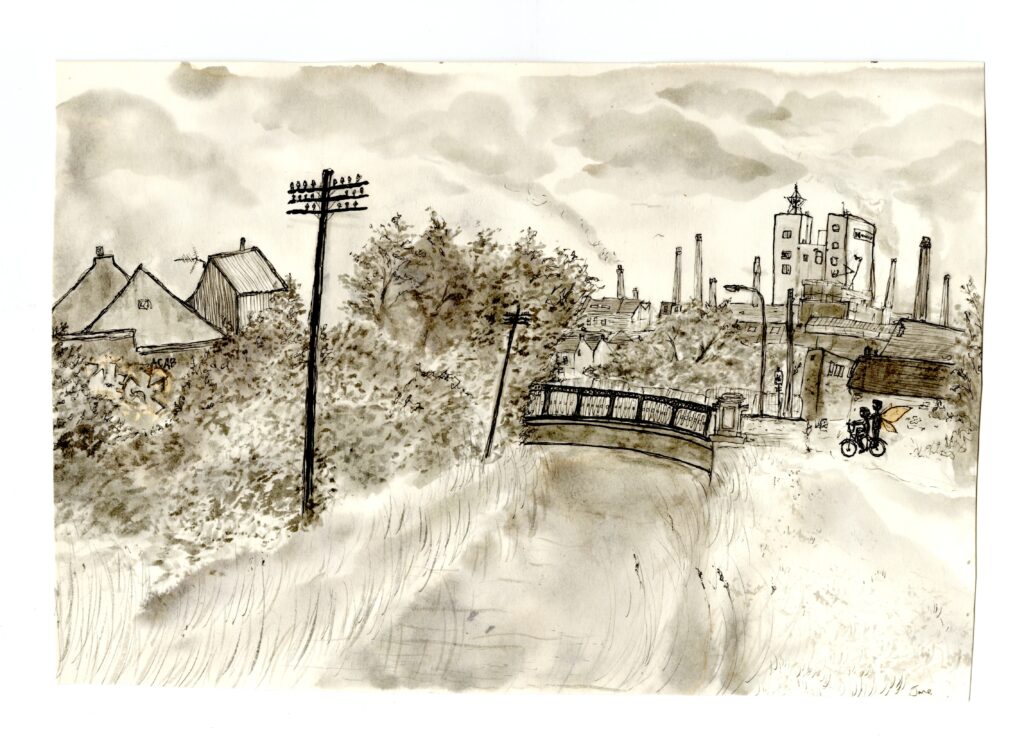
Here in Hull, a sprawling network of drainage waterways has informed how local residents live, work and play for the last 200 years. These channels were originally cut to drain the waterlogged landscape, transforming the ‘carrs’ of the low-lying Hull valley from marshy pasture into arable farmland. As the city continued to develop throughout the 19th and early 20th centuries, rows of terraced housing – later to be replaced by large council estates – schools, and community centres were established along the course of the drains, and they became sites of leisure for anyone who wanted to walk, fish, dive or dip in or along their waters.
When I began this project in 2024, I found that whilst a comprehensive social history of these waterways had never formally been written, everyone in Hull seemed to have a tale from down the drains. Some told me about a family member who took an unfortunate tumble into the water, others showed pictures of fish caught on the drain banks, and many relayed nostalgic stories of an afternoon spent swimming in the warm waters of the ‘leccy’, a stretch of Barmston drain warmed by the industrial processes of Sculcoates power station.
Muddied Waters
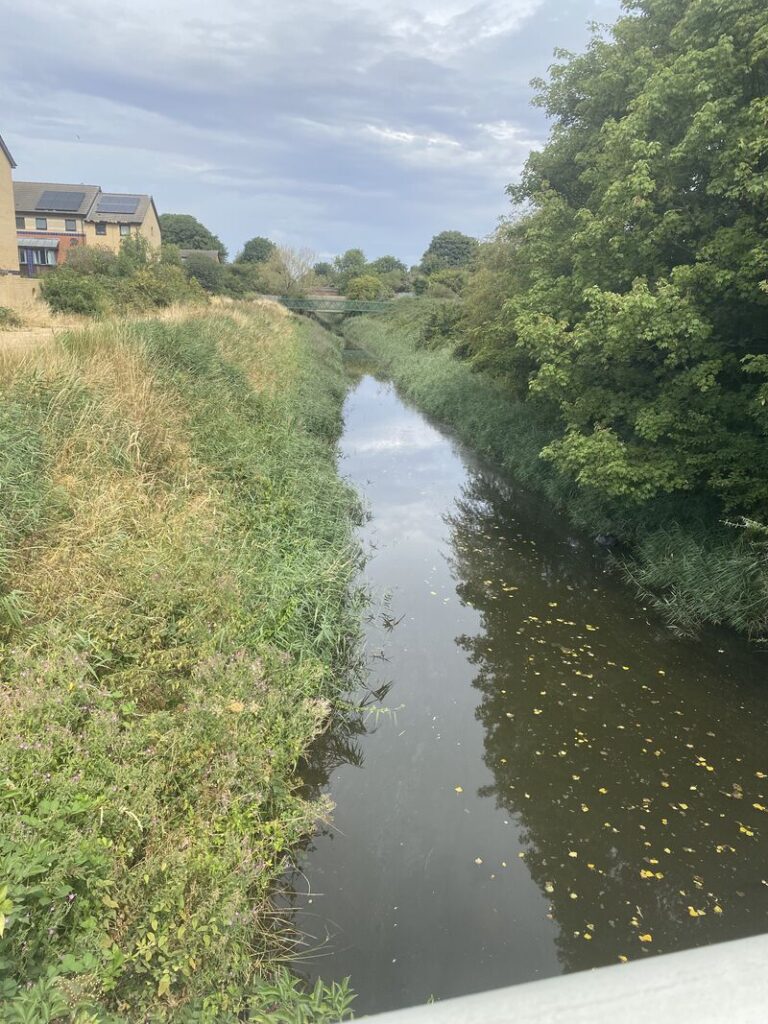
Yet I have also found these waterways to be plagued by problems, both historic and contemporary. Fly tipping is a common occurrence and has been since the Barmston and Holderness drains were first cut in the late 18th century. Agricultural run-off, invasive species and industrial pollutants are also commonplace, and access is becoming far more difficult for local residents, who are increasingly seeing drains as dingy and dangerous spaces. One participant told me that:
“Some of the sections are clean but the majority of the Barmston drain is very poor. I used to fish the area regularly when I was younger and can remember there been lots of places to fish… Now there is only one place you can really access. The area could be a great for local fishing and nature again but would need the councils help.”
Despite the presence of these drains in the local collective memory, these pervasive issues of perception, access and pollution mean that today, Hull’s drain-side communities aren’t experiencing the social and environmental benefits that the waterways had once provided for their ancestors.
Forging New Connections
Drawing on the participatory methods pioneered by Risky Cities, Tales from Down the Drain seeks to extend the concept of archive-based community workshops to forge new watery histories, reconnecting communities with the urban drainage waterways that chart a course through their neighbourhoods.
To do so, it was important that any future workshops would be built on a strong foundation of local anecdotal and memory-based knowledge. This was collected through a large survey, distributed to 50 members of local heritage and fishing Facebook groups; a series of 10 one-to-one oral history interviews; two group memory café sessions and, last but not least, a considerable bundle of hand-written testimonials from people who had grown up around the Holderness and Barmston Drains in the mid-20th century.
Early Findings
This memory data was then subject to a thematic analysis, where some of the most common themes were cross-referenced with available sources in the Hull History Centre and used to formulate potential research strands for the Tales from Down the Drain archive workshop series.
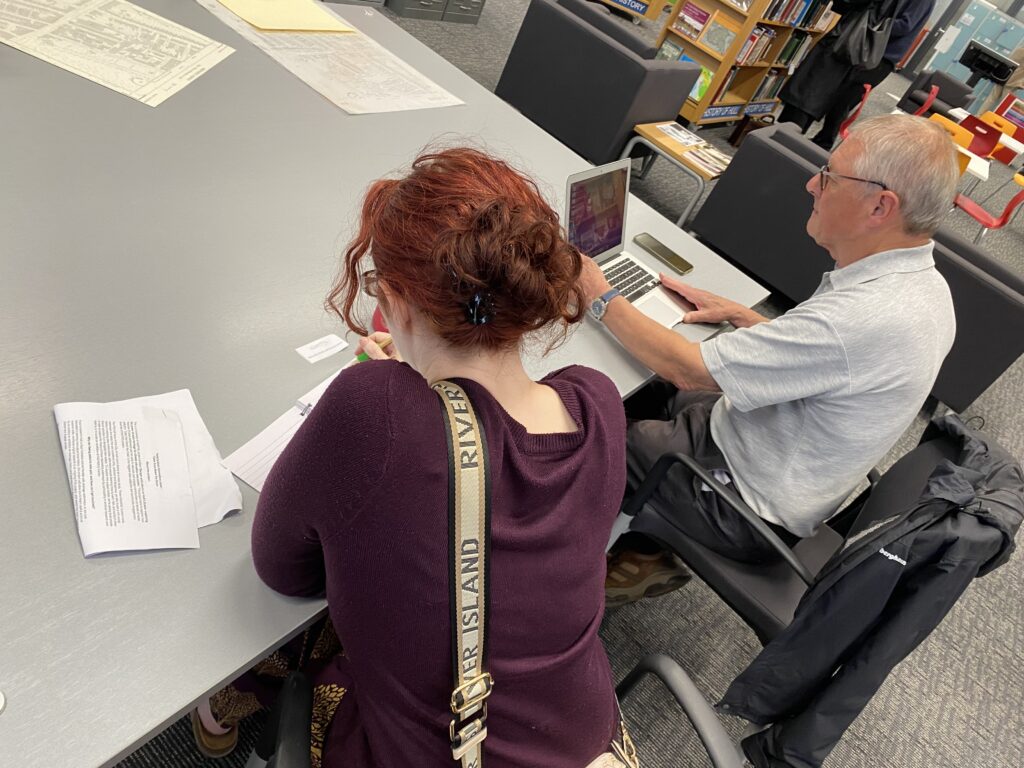
This second stage of the project, which took place from July – August 2026, saw 11 brilliant community researchers come together to learn new skills and investigate one of five themes: swimming, leisure, death and crime, drain-side communities, and sanitation and pollution. The research then fed into a unique contribution from each researcher that, when combined, formed the basis of panels for an exhibition on Hull’s drains. Some of the most exciting creations from the group include a watercolour painting of Barmston Drain, based on a work from the Victorian artist F.S Smith; a detailed history of rambling routes along the drain banks; poetry based on personal experiences and a report on water oxygen levels and pollution, both in the past and the present.
What’s Next?
By opening the archives up to the local community, we as historians and heritage practitioners gain a fresh new perspective on the documents, photographs and stories they hold. In January 2027, our co-produced, co-curated exhibition will go on display at Hull History Centre, before moving to other venues across East Yorkshire. The work on display promises to amplify these local voices and uncover hidden watery histories, whilst also creating a space for new dialogues about the social and environmental issues faced by Hull’s drainage waterways, including issues of pollution, flood alleviation, or access. Moving forward, this ‘community history’ will be utilised as part of a series of environmental workshops that seek to engage young people in these dialogues, connecting them to the past, present and future of their local waterway.